Finova
A privacy-forward, low-friction budgeting app with a personalized AI coach.

What it is
Finova is a personal finance app for iOS and Android built around two ideas: logging an expense should take seconds, and your financial data should stay yours. It covers the basics well, budgets, transaction tracking, savings goals, recurring payments, categories, and charts, and adds a personalized AI coach that looks at your patterns and gives you guidance you can actually act on.
The free tier works entirely on the device. There is no account and no cloud sync; everything lives in a local database on the phone. The paid tiers add cloud sync, recurring AI insights, and a streaming AI coach you can chat with. There is also an Apple Watch app and home-screen widgets for quick capture, and expenses can be logged by voice or by snapping a receipt.
Why I built it
I have tried a lot of budgeting apps, and most of them fail for the same reason: they ask for too much. Too much setup, too many taps to log a coffee, and too much of my data on someone else’s server before I even know if I’ll keep using the app. I wanted something that was low-friction first and private by default, and then used AI where it actually helps, which is explaining what your spending says about you and what to do next.
Architecture
The app is offline-first. Flutter with Riverpod on the client, and a local SQLite database as the source of truth on the device. The hard part was synchronization: when a user upgrades and turns on sync, the app does a delta sync against the backend with version-based conflict resolution, so edits made on two devices converge without silently overwriting each other. I also added account-switch safeguards so that signing out and into a different account can never leak one user’s data into another’s local database. That one took a few iterations to get right.
The backend is Go with a Clean Architecture layout, running as ARM64 AWS Lambdas behind API Gateway, with Cognito for auth and Neon’s serverless Postgres for storage. AI insights are generated asynchronously: a request drops a job on SQS, a worker Lambda calls Amazon Bedrock (behind Bedrock Guardrails), and the result is stored and surfaced in the app when it’s ready. The coach is different because it has to feel live, so responses are streamed to the client over Server-Sent Events as the model produces them. Exports go to S3 as CSV, and the whole thing is traced end to end with OpenTelemetry.
Everything is Terraform, with a nightly and a production environment, and subscriptions are handled through RevenueCat so the app never touches receipts directly.
Tech stack
- Mobile: Flutter, Riverpod, go_router, sqflite, fl_chart, RevenueCat, Sign in with Apple and Google, Apple Watch app and widgets
- Backend: Go, chi, AWS Lambda (ARM64), API Gateway, Cognito, SQS, S3, Amazon Bedrock, Neon Postgres, OpenTelemetry
- Landing: Next.js, React, Tailwind, shadcn/ui
- Infra and tooling: Terraform, Turborepo, release-please, PostHog
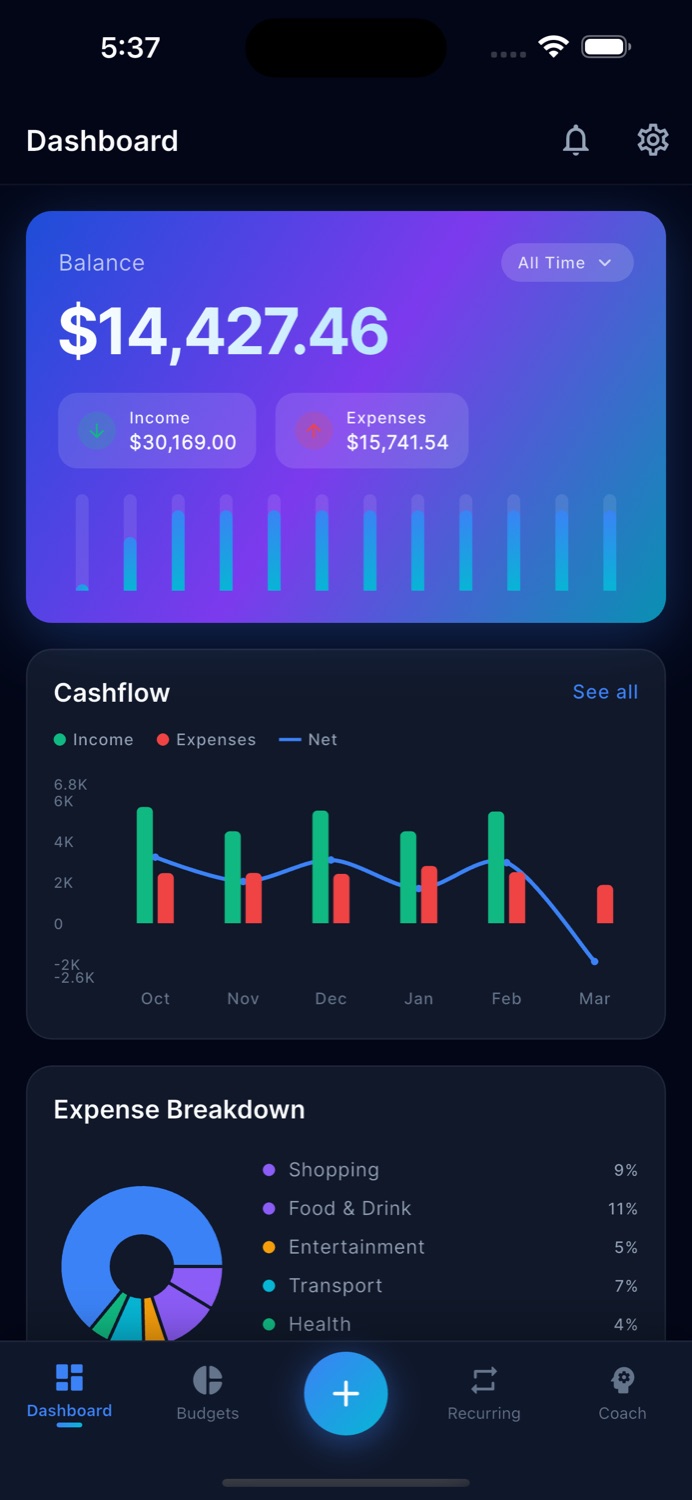
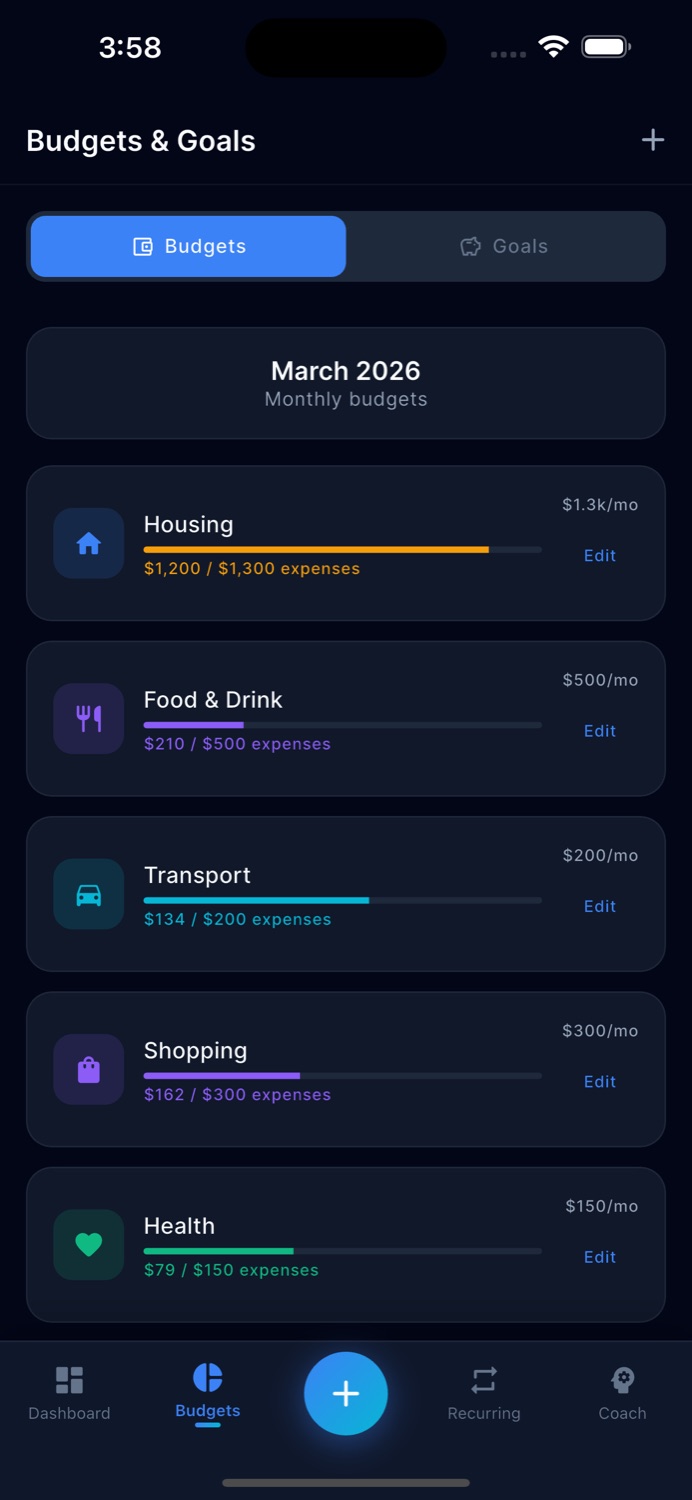
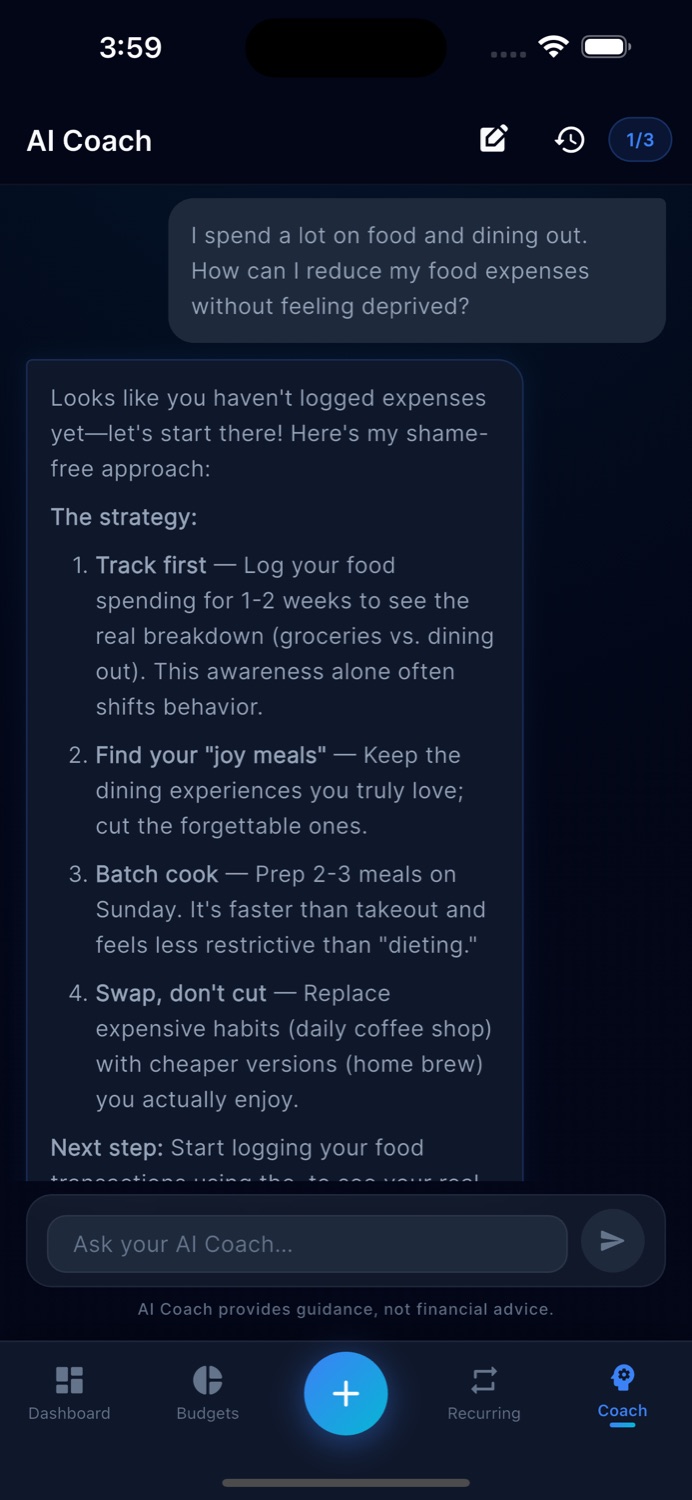
The landing page at finovaai.app
Closing thoughts
Finova was where I first put Go and Bedrock together in a real product, and where I learned how much of “AI features” is actually plumbing: queues, streaming, guardrails, and making sure the model never sees more than it needs. The offline-first sync was the most satisfying part to build, and it’s the piece I’d carry into any product that has to work when the network doesn’t.